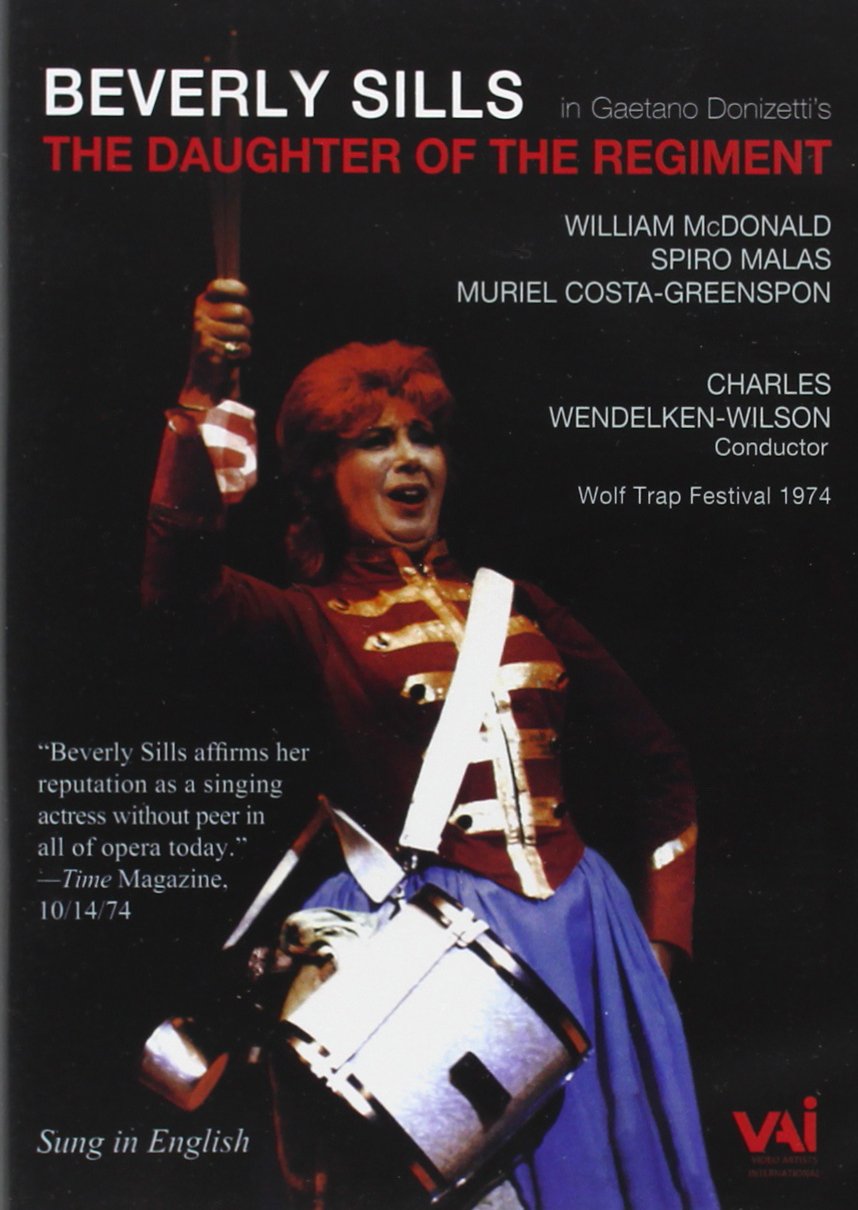
Donizetti - La Fille Du Regiment (The Daughter Of The Regiment) Sung In English
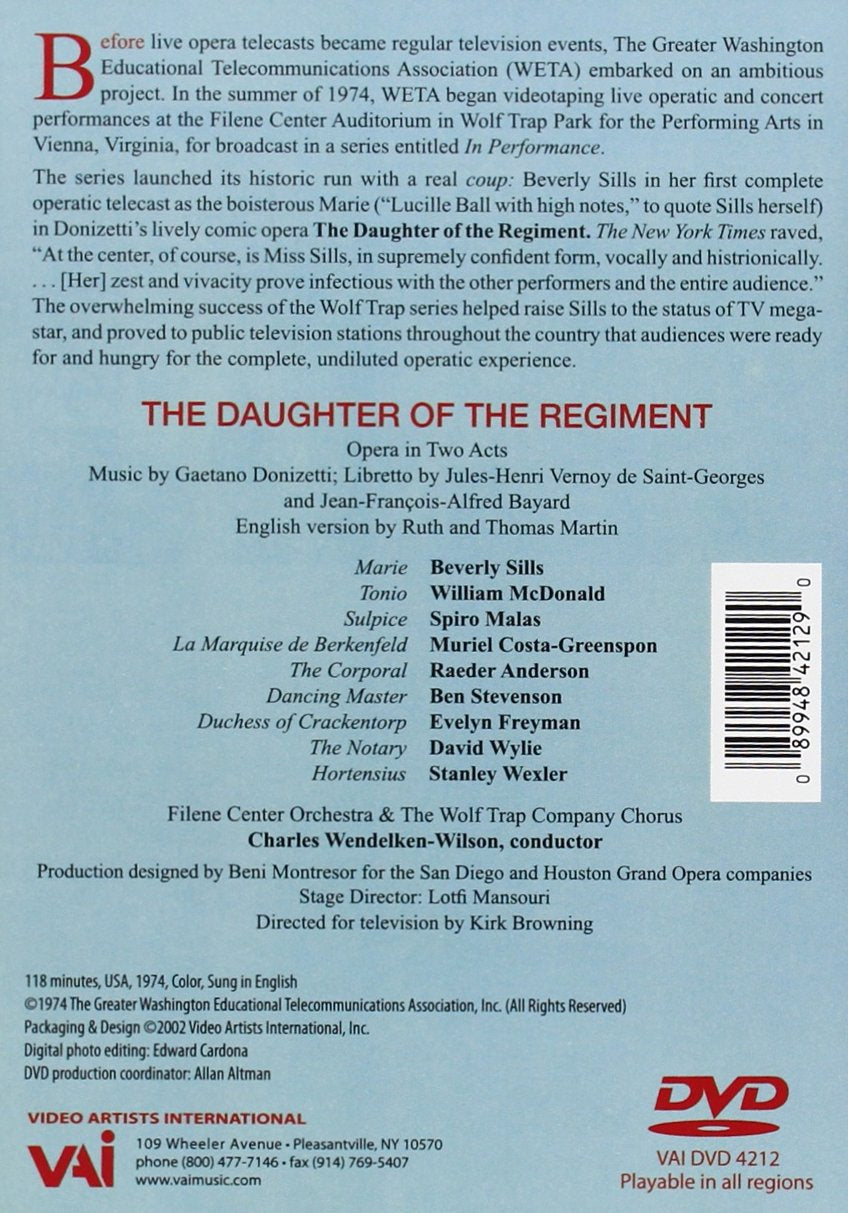
Marie - Beverly Sills Tonio - William McDonald Sulplice - Spiro Malas La Maquise - Muriel Costa-Greenspon Hortensius - Stanley Wexler Caporale - Raeder Anderson La Duchesse - Evelyn Freyman
Wolf Trap Festival
Charles Wendelken Wilson
118 minutes, color
***
"At the center, of course, is Miss Sills, in supremely confident form, vocally and histrionically... (Her) zest and vivacity prove infectious with the other performers and the entire audience." (New York Times)
"In a brief interview, Sills describes Daughter of the Regiment as “a silly little story, one long episode of Lucille Ball. I play [Marie] as Lucille Ball with high notes.” That may tell you what to expect here. Except for one or two unavoidably poignant moments, the opera is milked for laughs. The characters ham it up shamelessly the acting is often cartoonish–an effect emphasized by the flat, painted sets and the colorful costumes. Sourpuss that I am, I would prefer the comedy to be less broad; but maybe it didn’t seem so overdone in the theater. The characters’ heavy makeup and exaggerated facial expressions need also to be seen at a greater distance.
The performance is in English, a great advantage in the spoken dialog, but the level of clarity is remarkable even in the sung passages. The supporting players act well, especially Costa-Greenspon, who has the vocal strength to back up her more frenzied effusions. Malas made something of a specialty of Sulpice (he recorded it for Decca with Sutherland and Pavarotti and sang a couple of performances at the Met), and he moves comfortably on stage. McDonald is a stiffer actor, though amiable enough. His voice is bright and keenly focussed, with the timbre we associate with the typical Irish tenor. He sings his high Cs without breaking a sweat, articulating the words cleanly even in the stratosphere. He lacks something in tonal variety and strength, sounding too feeble in the final scene when the regiment rushes in to rescue Mane.
The heroine herself is sometimes fluttery and pallid, but the trills are wonderful, the coloratura is dazzling, the high notes are in place, and the acting is enthusiastic. I can imagine better orchestral playing and more dynamic conducting, but you won’t notice all that much: it’s the singers’ show, and everyone is having a great time.
The sound is not perfect. The voices are recorded at too low a level; when you boost the volume to bring them closer, the thumping stage noises become deafening. No subtitles–you probably won’t miss them." (Ralph V. Lucano, American Record Guide)
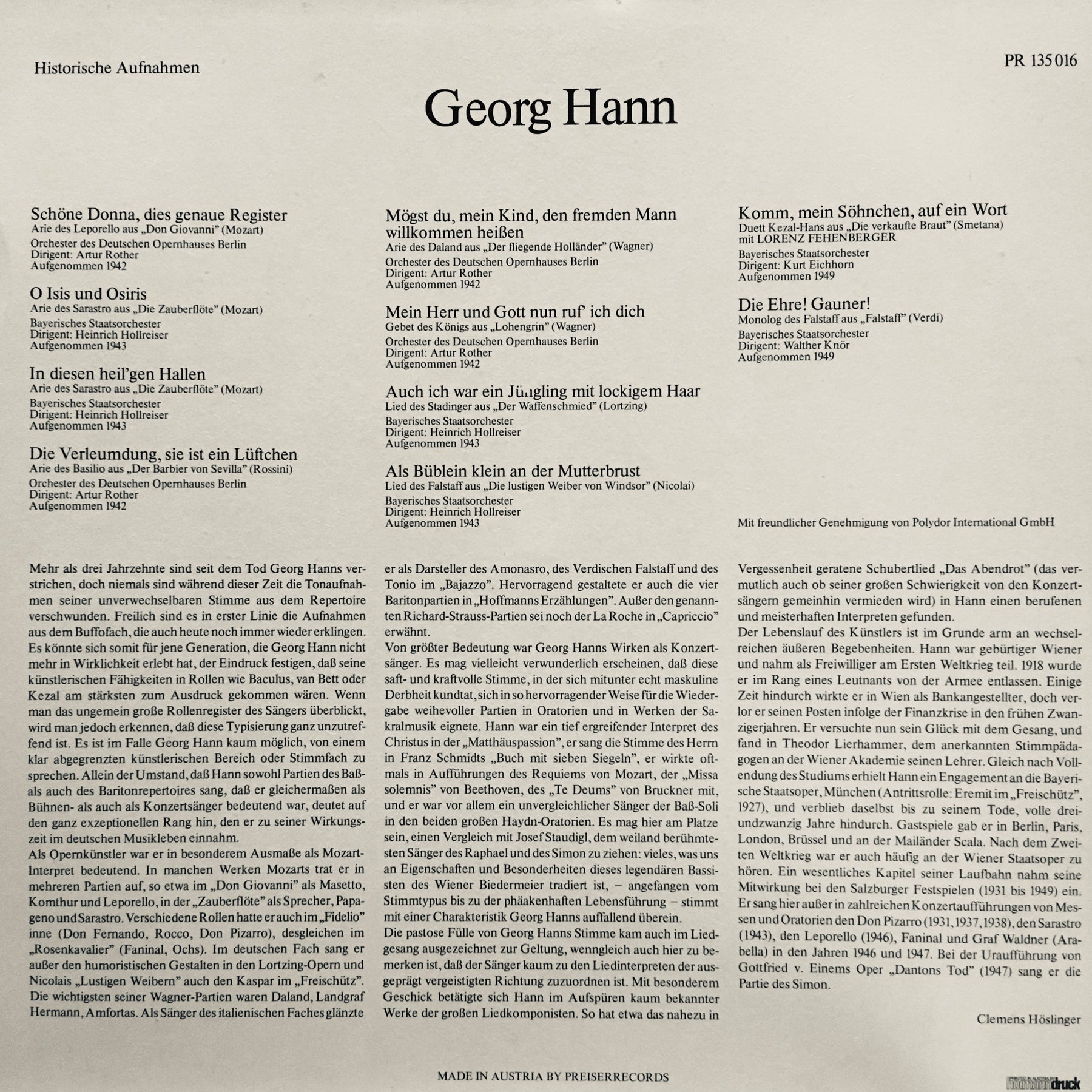
Don Giovanni, Die Zauberflöte, Il Barbiere di Siviglia, Der fliegende Holländer, Lohengrin, Der Waffenschmied, Die lustigen Weiber von Windsor, Die verkaufte Braut, Falstaff
Giulia De Blasis, Arcangelo Carbotti, Gaia Petrone, Marco Filippo Romano; Orchestra Internazionale D'italia, Coro Del Teatro Municipale Di Piacenza; Fabio Luisi
John Sorel - Eberhard Wächter Magda Sorel - Melitta Muszely Mother - Res Fischer Police Agent - Willy Ferenz Vera Boronel - Hilde Konetzni Magician - László Szemére Secretary - Gloria Lane
Orchestra of The Wiener Volksoper Franz Bauer-Theussl
"Directed by Rudolph Cartier, it's shot in relentless close-ups that give neither the performers nor the viewers anywhere to hide. Melitta Muszely charts Magda's progress from desperation to hope to suicidal despair with uncompromising veracity. There are equally impressive performances from Eberhard Waechter as her husband and Gloria Lane as the consular secretary." (The Guardian)
"Gian Carlo Menotti was one of the most important 20th-century composers of opera working in the United States. For his opera The Consul he won the Pulitzer Prize for Music and the New York Drama Critics Circle Award. This unique studio recording from the early years of television is performed by an extraordinary cast featuring Melitta Muszely, Eberhard Waechter, Res Fischer and Hilde Konetzni. The plot of the politically charged drama takes place in Europe of the 1950s. The Orchestra of the Wiener Volksoper is conducted by Franz Bauer-Theussl. An important document of operatic and film history, this restored recording is available on DVD for the first time." (Art Haus)